Pairing Trencher and Compactor Loans With Your Mini Ex
6 min readIllustrative guidance—not an offer
Utility and site crews often need a trencher attachment or ride-on compactor in the same season as a mini ex upgrade. Stacking equipment notes raises combined debt service—smart operators sequence purchases and document job backlog that supports both payments. MiniExcavatorFinancing.org helps plan primary machine financing from $10,000 to $1,000,000 or more and follow-on tickets for trench and compaction gear.
Host machine first, or a package deal
There are two common ways to buy a mini excavator and its trench and compaction gear. The first is to fund the host machine, work for a few months, then add the second piece when jobs justify it. The second is a package, where the excavator, a trencher or attachment, and a compactor are bought together and financed on one or two notes.
The sequential path is easier on cash flow and builds a payment history with the funding source. The package path saves time and sometimes earns a better price from a dealer who wants the whole order, but it adds payment immediately and requires a stronger file.
The right choice depends on your backlog. A contractor holding signed utility work for the next six months can reasonably buy the package. One who is still bidding should buy the excavator first.
Testing combined debt service
Add every equipment payment together, including the ones you already carry, and compare the total with your average monthly deposits. A common comfort zone for lenders is a combined payment that is a modest share of average deposits, leaving room for payroll, fuel, insurance, and materials.
Take a concrete case. A $78,000 five-ton with 10% down finances to about $70,200 and carries a payment near $1,248 over 72 months at an illustrative 8.5% APR. A $34,800 ride-on trencher over 60 months at an illustrative 9.1% APR adds about $724, and a $3,600 plate compactor over 24 months adds near $165.
That stack is roughly $2,137 a month before insurance, fuel, and repairs. If your average deposits are $18,000 and you have other fixed costs, the picture is workable. If they are $9,000, it is not, and the solution is sequencing or a larger down payment.
Sequencing around the season
Buying a trencher in November in a cold climate puts a payment on a machine that will sit until spring. Buying it in March, when backlog is full and ground is workable, puts the same payment against revenue within weeks. Timing matters as much as price.
Southern markets have a different rhythm, with summer heat, rainy seasons, and holiday slowdowns. Map your last two years of deposits by month, then place each purchase where deposits are strongest.
Spacing purchases by a quarter or two also lets you learn whether a piece of equipment is paying for itself before you buy the next. A trencher that runs 15 days a month earns its place, and one that runs three days may be better rented.
Attachment trenchers versus dedicated trenchers
A trenching attachment mounts to the excavator and uses its hydraulics. It costs less than a dedicated machine, adds no separate engine to maintain, and uses a coupler to swap in minutes. It also ties up the host machine, so you cannot dig with the bucket while it is trenching.
A dedicated ride-on or walk-behind trencher is a separate machine with its own engine, tracks, and transport needs. It can run while the excavator does other work, and it often trenches faster in repeat conditions, but it carries its own payment, insurance, and trailer capacity.
For crews that trench a few days a week, an attachment is often the cheaper route. For crews that trench most days and keep the excavator busy elsewhere, a dedicated unit pays back through added production.
Compaction gear and what lenders think of it
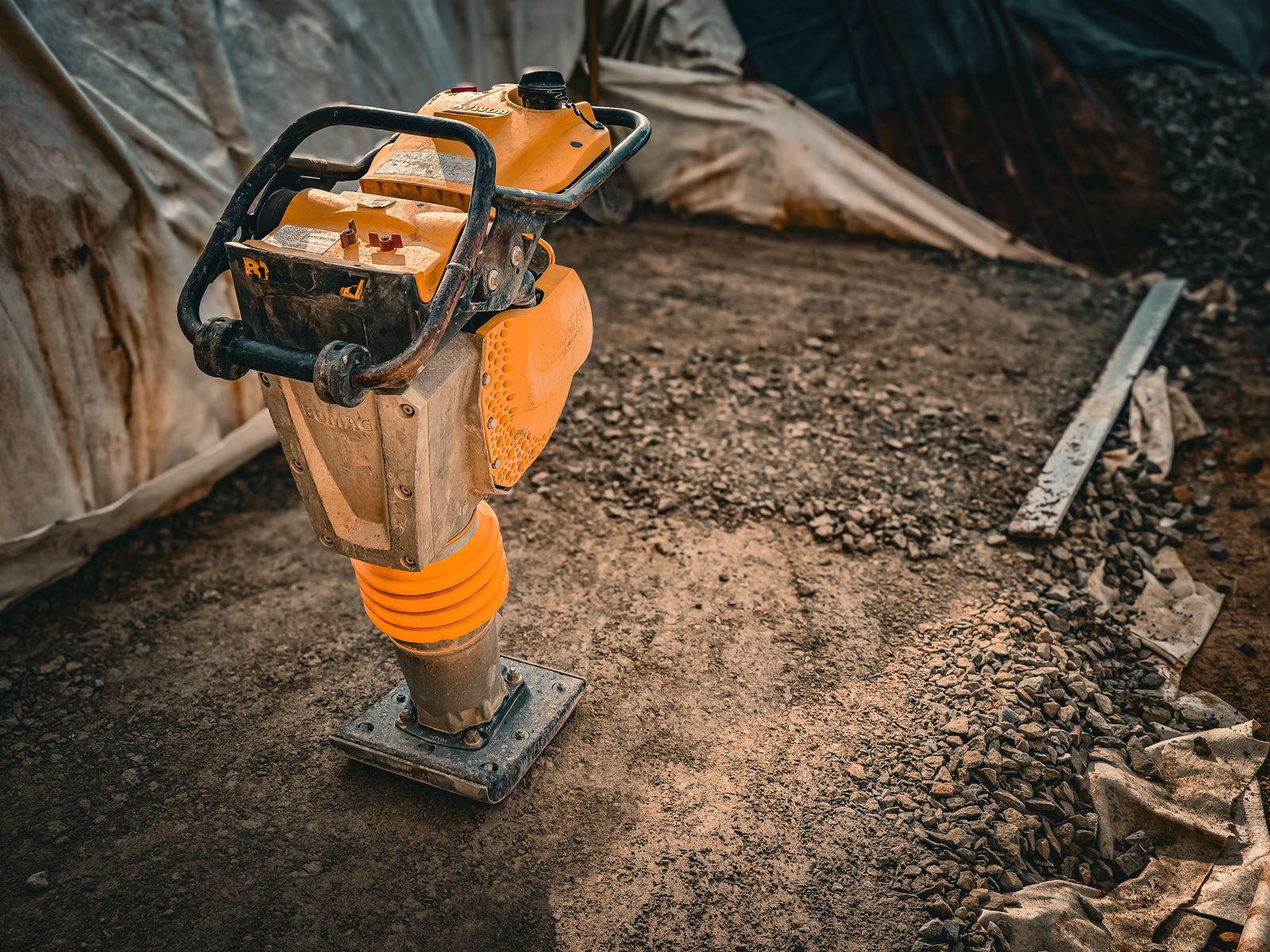
Plate compactors, trench rollers, and walk-behind rammers are small-ticket items compared with an excavator, but they are part of trench work. A forward plate compactor can cost a few thousand dollars, while a remote-operated trench roller is a much larger purchase.
Small items are often paid in cash or bundled on the dealer invoice. Standalone financing for a $3,600 compactor is possible but may carry minimum ticket sizes and shorter terms.
Lenders view compaction equipment as secondary collateral. It has real resale value, but it is easy to move and often lacks a serial plate that survives years of use. That is why bundling with the host machine, when possible, is simpler.
A rental bridge for the second tool
Renting a trencher for two weeks before buying one is inexpensive insurance. You learn how much of your work actually needs it, what soil conditions it handles, and what a day of production looks like.
Some rental yards credit a portion of the fee toward purchase. Even without a credit, you will have real data for your cash-flow model and a clearer idea of which size and model fits.
If a rental turns into a recurring habit, you have your answer. Three rentals in a quarter at $1,200 each is a signal that ownership may beat the yard, and the numbers for a note will be easier to defend.
Documenting the backlog that supports two payments
When a file includes more than one equipment note, the reviewer wants to see work that justifies it. Contracts, purchase orders, bid awards, and written estimates from customers all count, and so do repeat orders from the same general contractor.
Organize those documents by month so the reviewer can match expected billing to expected payments. A single page that lists each job, its start date, and its expected revenue is more persuasive than a stack of unlabeled PDFs.
Be candid about what is firm and what is hoped for. Underwriters prefer a smaller, believable backlog to a large one that does not hold up under a phone call.
Insurance and transport for a growing equipment stack
Every added machine increases insurance, transport needs, and risk of theft. A trencher on a separate trailer needs coverage, a place to park, and a truck capable of pulling it, and a second trailer may be needed if the first is already loaded with the excavator.
Check how your policy treats a fleet. Scheduled coverage by serial number is common for larger pieces, while smaller tools may fall under a blanket limit that could be too low if a theft takes several at once.
Include these costs in your debt-service model. A $724 payment for a trencher often brings another few hundred dollars a month in insurance, fuel, and trailer costs.
When to consolidate and when to keep notes separate
Separate notes on separate machines keep the collateral clear and let you pay off a small ticket early. A combined note simplifies payments but makes it harder to sell one piece without refinancing.
As a rule, keep short-lived, lower-value items on short notes, and put long-lived, high-value iron on longer ones. The shorter schedule on a compactor clears the payment before it competes with the next machine.
Planning the stack with MiniExcavatorFinancing.org
Bring the full wish list to your first conversation, even if you only plan to buy one item now. An advisor who sees the whole picture can structure the first note with room for the second.
Describe your job backlog and the months in which payments will be hardest. That makes a term choice and a down payment recommendation more concrete, and it prevents buying equipment that will compete for the same limited cash.
Programs from $10,000 to $1,000,000 or more apply to the host machine and follow-on tickets, and you can begin with no credit check to inquire. Credit from 500 to 800+ FICO is considered with deposits, experience, and the strength of the backlog behind the purchase.
Iron desk
Get iron lined up
No credit check to inquire.
Related guides
Financing Mini Excavator Attachments With the Host Machine
Finance thumbs, couplers, and buckets with your mini ex. $10k–$1M+ equipment loans. No credit check to inquire. Credit from 500 to 800+ FICO. MiniExcavatorFinancing.org.
Landscaping vs. Utility Mini Excavator Choice for Buyers
Pick the right compact excavator class for landscaping or utility work and finance it. $10k–$1M+. No credit check to inquire. MiniExcavatorFinancing.org.
Seasonal Excavation Cash Flow and Payment Timing
Align mini excavator payments with seasonal work. Finance $10k–$1M+. Credit from 500 to 800+ FICO. No credit check to inquire. MiniExcavatorFinancing.org.