Rubber Tracks and Undercarriage Costs in Financing Decisions
7 min readIllustrative guidance—not an offer
Rubber tracks and undercarriage condition drive both operating cost and how lenders view used compact excavators. A machine at fair price with 20% track life remaining can become an expensive mistake if you finance on a 72-month note. MiniExcavatorFinancing.org encourages buyers to pair mechanical diligence with term selection so payments match the iron you actually own—not the shiny paint in listing photos.
Why undercarriage matters to the people funding the machine
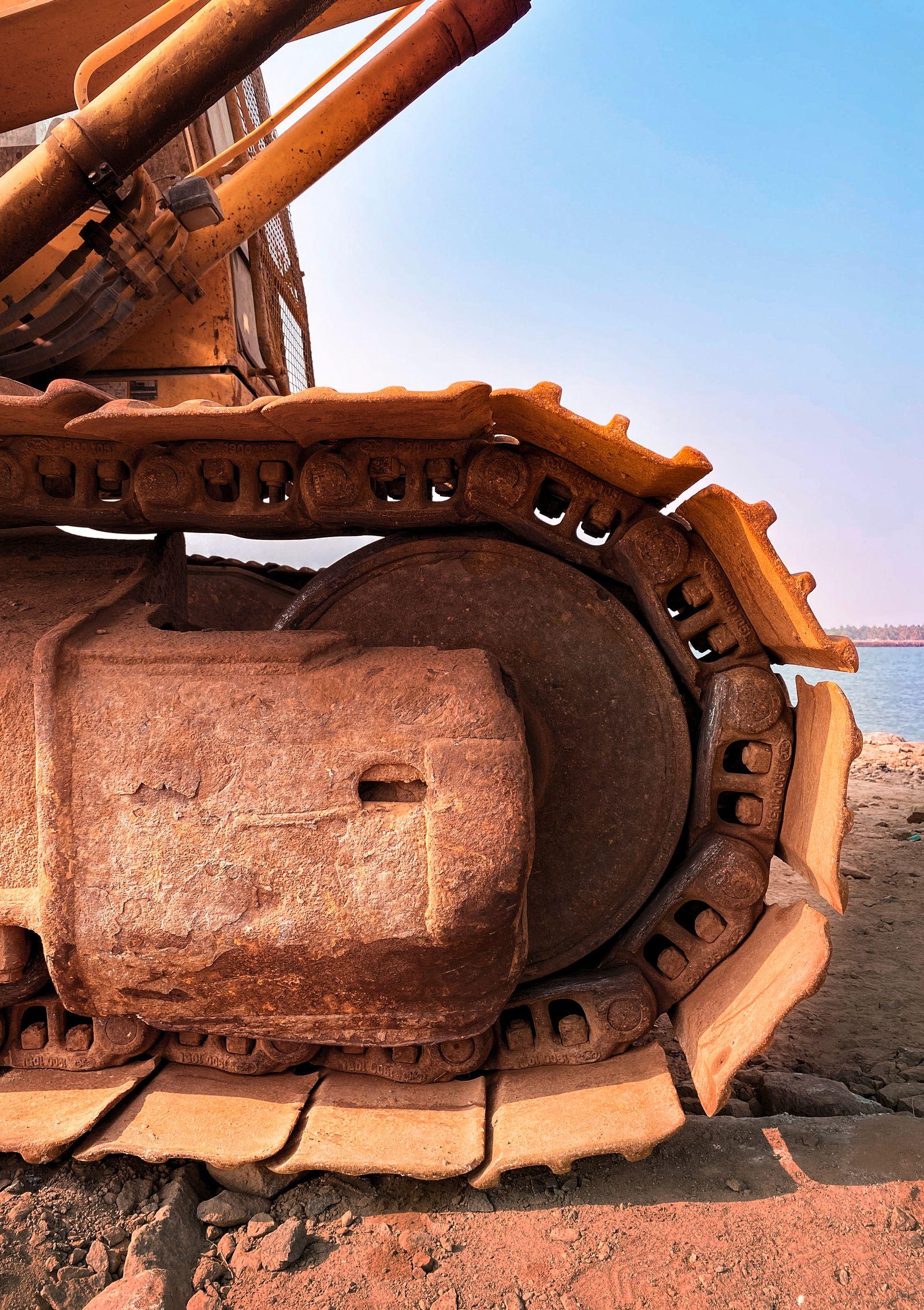
On a compact excavator the undercarriage is the wear system that moves the machine: tracks, rollers, idlers, sprockets, and the final drives that turn them. It is also where hours show up as money. A unit can look fine from the cab, with a clean bucket and good paint, while the tracks are cracked and the rollers are seized, and the repair bill lands on whoever signs the note.
Lenders care because the undercarriage drives resale. When a machine returns to market, a buyer discounts it by the cost of the work it needs. A used unit with 20% of its track life left is priced differently from one with 70%, and an advance rate that ignores that gap leaves the lender holding more risk than the price suggests.
That is why undercarriage condition influences term length and advance, not only the headline price.
Typical wear-cost bands to budget for
These ranges are illustrative and vary by brand, size, and region, so ask local dealers for quotes. A pair of aftermarket rubber tracks for a three-to-five ton machine commonly lands in the low-to-mid thousands of dollars installed, with premium tracks costing more. Replacing sprockets, idlers, and carrier rollers is a separate line, and a failed final drive can run several thousand dollars on its own.
A full overhaul of tracks, rollers, idlers, and sprockets on a mid-size compact can approach the cost of a modest down payment. If you are buying a unit that needs that work soon, subtract it from what you are willing to pay, then compare the adjusted price with similar machines in good condition.
A budget of roughly $9,400 for a complete undercarriage refresh financed over 24 months at an illustrative 9.5% APR would carry a payment near $432, which is worth knowing before you decide whether to wait for a cleaner unit.
Reading the undercarriage in person
Start with the tracks. Look for cracks across the lugs, missing chunks, exposed steel cords, and edges that have rolled over the sprocket. Lugs worn flat or tracks that sag past the manufacturer's tension spec are signs that replacement is close.
Move to the rollers and idlers. Wet oil around a seal, flat spots on a roller, or an idler that wobbles are all expensive discoveries after delivery. Spin a roller by hand when the machine is jacked, and listen for grinding in the travel motors while the unit moves forward and backward under its own power.
Take photos of each side and ask the seller for the remaining-track estimate in writing. When a dealer rates tracks at 40% or 60%, it gives your lender a number to work with, and it sets the expectation if a dispute comes up after delivery.
Hour meter versus actual wear
Hours are a proxy, not a guarantee. A machine with 2,800 hours that spent its life in sandy loam on rubber tracks can have more life left than one with 1,900 hours worked on rock and demolition debris. Abrasive soil, constant travel, and aggressive counter-rotation turning chew through undercarriage regardless of the meter.
Lenders still lean on hours because they are easy to verify, but a strong undercarriage report can offset a mediocre reading. A used five-ton at 3,100 hours with fresh tracks, documented rollers, and a clean service log is a different file from the same hour count with no records at all.
Likewise, low hours on a machine that sat for years can hide dried-out seals and cracked rubber. Age counts as well as use, and a unit that spent a decade parked in a lot may need work before it ever earns a dollar.
Choosing a term for worn undercarriage
A long term on a machine that needs undercarriage work soon creates a gap between when the iron wears out and when the loan ends. If you finance a 72-month note and the tracks need replacement in 18 months, you will pay for the replacement while still owing most of the balance.
A shorter term of 36 to 48 months, or a larger down payment, keeps balance and value moving together. The payment is higher, but you are not underwater when the machine needs major work, and lenders view that structure more favorably on high-hour units.
If you prefer a longer term for cash flow, set aside a maintenance reserve during the first year. Many owners put away a fixed amount each month so that a track replacement is a planned event instead of an emergency.
Financing after you have done major undercarriage work
If you already own a machine and need to refresh the undercarriage, the question is whether the repair is a financing candidate or a cash expense. Work done by a dealer with an itemized invoice can sometimes be financed as a small equipment ticket, especially when the machine is otherwise paid down.
A well-documented overhaul helps resale too. A buyer, or the next lender, sees a unit with new tracks and rollers and treats the machine as having a fresh clock. Keep invoices, part numbers, and dates in a folder with the title paperwork.
Do not expect a lender to finance repairs that do not raise collateral value. Routine service and consumables are normally paid from operating cash, while larger replacements that clearly extend life are the ones worth discussing.
Steel tracks, rubber tracks, and ground conditions
Rubber tracks are standard on most compact excavators because they are quieter, gentler on finished surfaces, and easier to transport. Steel tracks, or steel tracks with rubber pads bolted on, hold up better on rock, demolition debris, and rough ground, but they damage pavement and lawns.
Match the track type to the work you will actually do. A machine used on sharp shot rock will chew through rubber, while a machine on residential lawns with steel tracks will leave marks that cost you the customer. Both types finance when condition supports value, but the used market treats a machine in the wrong configuration for its region as slower to sell.
Track width also matters. Wider tracks give better flotation in soft soil but increase transport width and wear faster when turning on hard surfaces.
Maintenance habits that stretch track life
Daily habits change how many hours a set of tracks delivers. Clean packed mud and gravel out of the undercarriage at the end of the shift, since debris wedged between the track and the rollers accelerates wear. Check track tension weekly, because a loose track can slip off the sprocket and a tight one strains bearings.
Avoid spinning the machine in place on pavement, turning on slopes with a loaded bucket, and driving across curbs at an angle. Each of those moves tears lugs or damages the rubber carcass.
Budgeting a reserve with MiniExcavatorFinancing.org
When you ask for a quote at MiniExcavatorFinancing.org, include what you know about the undercarriage. A buyer who says the tracks are at about 50% and plans to replace them in the second year gets a different structure than one who has no idea.
A simple method is to estimate the replacement cost, divide it by the hours of life you expect, and add that hourly figure to your operating cost. At 1,200 hours of track life and a $4,200 replacement, that is $3.50 an hour, which belongs in every bid.
You can begin with no credit check to inquire, and programs from $10,000 to $1,000,000 or more consider credit from 500 to 800+ FICO alongside the collateral story. Bringing undercarriage photos with your first message often makes the conversation shorter.
Iron desk
Get iron lined up
No credit check to inquire.
Related guides
Used Mini Ex Hour Meter Thresholds Lenders Watch
Hour limits on used compact excavator loans. Finance $10k–$1M+. Credit from 500 to 800+ FICO. No credit check to inquire. MiniExcavatorFinancing.org.
Dealer vs. Auction Mini Ex Purchase for Financed Buyers
Finance dealer or auction compact excavators. $10k–$1M+ loans. No credit check to inquire. MiniExcavatorFinancing.org.
Rental vs. Buying a Mini Excavator: When Ownership Pays
Compare rental yard costs to financing a compact excavator. $10k–$1M+ loans. No credit check to inquire. MiniExcavatorFinancing.org for contractors and landscapers.